

Throughout the twentieth century, the secular and irreligious forces that helped to produce the ravages around the world have been steadily and aggressively at work eroding America's religious and cultural foundations. Groups, such as the American Civil Liberties Union (ACLU), that have arisen out of atheistic Communism have succeeded in cheating America out of the greatest national heritage the world has ever known. But, the historical record is teeming with evidence that refutes the uninformed opinions of liberal judges who have kowtowed to these irreligious anti-American groups.In his media presentation, The Truth About America's Christian Origin, Dr. Stephen Flick—founder of Christian Heritage Fellowship, Inc.—demonstrates how America was Christian from its inception. Relying upon historical documentation, Dr. Flick demonstrates how America's Founding Fathers sought to influence their nation with the Christian principles that they believed alone could make a nation great. Refuting the misinformation of secularists that have characterized Benjamin Franklin, Thomas Jefferson, and others as "deists," Dr. Flick provides primary evidence from the writings of the Founders of their commitment to the principles of Christianity. The facts exhibited in this presentation will never again allow members of the audience to believe that America was founded as a secular nation, but was established as the Founding Fathers intended—as a Christian nation. To schedule a presentation of The Truth About America's Christian Origin at your business, church, conference, or other gathering, please navigate to the speaker request form by clicking the button below. Or, simply email us using the following form: Contact Us.Schedule Speaker
Throughout the twentieth century, the secular and irreligious forces that helped to produce the ravages around the world have been steadily and aggressively at work eroding America's religious and c
Dr. Stephen Flick | December 30, 2025 | Contemporary
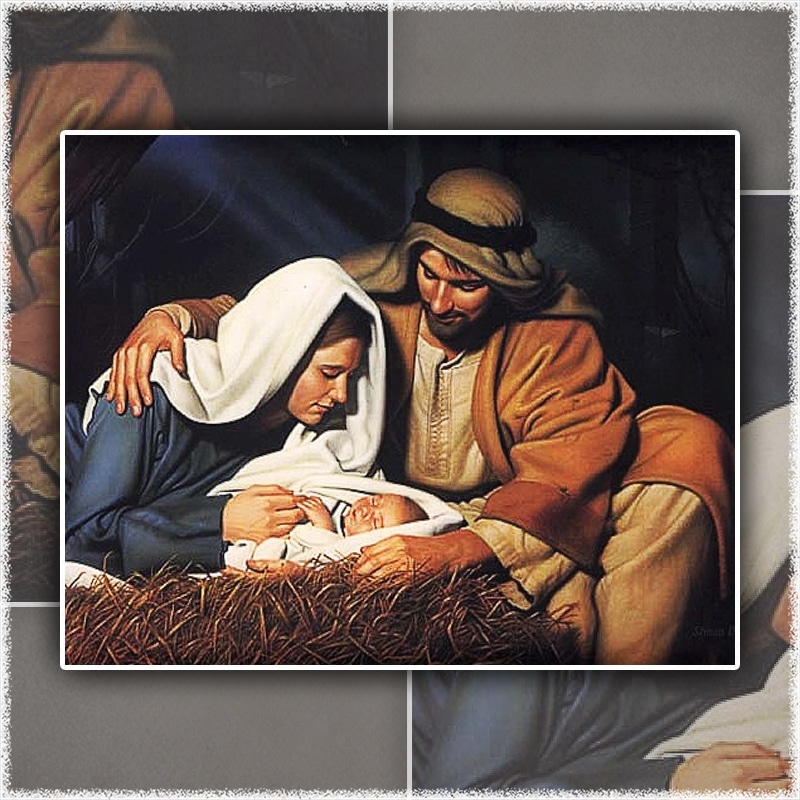
Often, the Christmas season is the most meaningful time of year—for both the believer and unbeliever. Many fail to use this season of the year to point to Christ as fully as they might to Christianize the world around them. While some attempt to sanctify the carnal and merely sensuous for Christian purposes, the Apostle Paul warns believers to build with materials that are most precious and most enduring (1 Corinthians 3:10-18). For this reason, Christian leaders should look eagerly upon the Christmas season with the intent to redeem every opportunity presented to them.As Christians anticipate the celebration of the birth of Christ, a couple of important biblical truths should influence the way in which we celebrate. By giving these important doctrines emphasis at this time of year, it is hoped that they will maintain an important place in our thinking throughout the year:The necessity of an atonement for sin—If the advent of sin into the world and its influences are not well understood, the world will not understand the purpose of the Advent of Christ, nor will they understand the need for salvation by a living faith in Christ.The Advent of Jesus—The Virgin Birth, the humanity of Christ, and his deity should be prevalent during the Christmas season.As the calendar year draws to an end, many opportunities for meaningful ministry exist. In America, Christians should make every effort to capitalize on the Christian heritage bequeathed to the nation by our forefathers. Parents, pastors, and local church leaders should not allow important historical and spiritual events to lapse without celebrating them within the church as well as advocating them in the community.ContentsIn addition to the highlights of this month that are discussed below, additional subjects of interest regarding our Christian heritage are presented online, where they are arranged according to dates of occurrence—with particular attention being given to the influence Christianity has exercised upon the origin of America. The online calendar where these articles are arranged is under continual development with new articles appearing as they become available. By clicking the message box below, readers will navigate to the present month under consideration. In the Julian and Gregorian Calendars, December is the twelfth month of the year. The last four months of our year, September, October, November and December, all receive their names from Latin numerical terms. Prior to the introduction of January and February into our calendar system, the old Roman calendar employed a calendar of only ten months. Latin numbers were given to these months: septem, (meaning seven) became September; octem, (eight) became October; novem (nine) became November; decem (ten) became December. When January and February were added to the ten-month calendar to become our twelve-month calendar, these latter four months retained their Latin names, despite their new positions as months nine, ten, eleven, and twelve.In the Northern Hemisphere, the meteorological winter begins on December 1, and it is the month with the shortest daylight hours. It is also the equivalent to June in the Southern Hemisphere where December 1 is the beginning of the meteorological summer and where the longest days of the year are experienced.Birthstones for the month of December include turquoise, zircon and tanzanite; the birth flower is the narcissus, a genus of predominantly spring flowering perennials of the amaryllis family, including daffodil, narcissus, and jonquil—which describe all or some members of the genus.Observance: December 4America's Christian heritage has been written in both large, bold, declarative statements as well as faint ornamental affirmations. To the degree that secularists and their supporters are successful in concealing the truth, to that degree America will walk in the darkness brought upon it and every nation where irreligion has ascended to tyrannical dominance. One of the many ways that America's Founding Fathers declared their intentions was not only through the principles they articulated in their writings, but the practices they observed, and few practices are as straightforward as the way they worshipped. If it may be demonstrated that their worship was Christian and that they intended that this worship should not be excluded from the recognition and appreciation of the government, the fraudulent claims of secularism are completely denied, and therefore, must be denounced by an accurately informed people. The misinformation and fraudulent claims of secularism against America's Christian heritage suffer a grievous blow when we realize that America's Founding Fathers established a church within the United States Capitol before its construction was complete, and the Capitol continued to be used as a Church until after the Civil War.A church had been meeting in the United States Capitol for more than five years before Congress officially occupied the Capitol. The first session of both houses of Congress at the Capitol began on November 17, 1800. During the first few weeks, committee room assignments and other designations for the use of the Capitol were made.It was during this period of allotting rooms and space throughout the Capitol, that the larger chamber of the House of Representatives was officially designated as the place where church services would be held. With no debate, the House of Representatives—by consensus—made provision for the use of their chamber for Christian worship services. No other building at that time in Washington was sufficient to accommodate the large crowd that attended worship at the Capitol, and the chamber of the House of Representatives was the largest room in the Capitol. The Annals of Congress records the ease with which Christian worship was officially sanctioned in the Capitol. On Thursday, December 4, 1800, a brief entry was made in this official record of the House of Representatives which read:The Speaker informed the House that the Chaplains had proposed, if agreeable to the House, to hold Divine service every Sunday in their Chamber.Observance: On or before December 6Early in the life of the Christian Church, believers began to engraft a pagan practice into the life of Christianity. That practice was the worship of the dead. Pagans had long practiced praying to loved ones and tribal heroes who were deceased, often placing objects of affection and veneration at their burial sites, and in time, the practices of ancestor and hero worship made their way into second- and third-century Christianity. These early pagan influences laid the foundation for the practice of saint worship—praying to renowned deceased Christian leaders.Though movements within the Roman Catholic Church attempted to reform this practice, it was not until the Protestant Reformation and Reformers such as John Calvin in Switzerland and the Dissenters of England that it was more forcefully resisted. Though believers must never attribute divine characteristics to those who have lived exemplary Christian lives, the study of their lives may lend remarkable encouragement to succeeding generations of believers.What may be known about Nicholas is often shrouded by fables and folk lure. Throughout the centuries following his death, more and more stories arose about Nicholas that were born out of a desire to create Christian heroes that would tower above the heroes of pagans and other non-Christians. The magical and supernatural deeds commonly credited to Nicholas were often the result of vivid imaginations on the part of admiring Christians who were often attempting to demonstrate the superiority of the Christian faith by displaying the supernatural acts of the most highly esteemed leaders of the faith.From what may be gleaned from the life of Nicholas of Myra (most commonly known as St. Nicholas), contemporary believers may expect to benefit from his example and lingering influence. Along with the Apostle Paul, Augustine, Luther, Wesley and many others, we may list St. Nicholas among that evangelical “great cloud of witnesses” and profit from what may be learned about his ministry.Nicholas was born about 270 in the city of Patara, a seaport city in the province of Lycia in Asia Minor. Today, Asia Minor is known as Turkey and is dominated by Islam. Born at a time when it was illegal to be a Christian, Nicholas’ parents were committed followers of Christ. Nearly half of his life was spent under the Roman Persecution of the Church—a time when Christians were martyred for their faith. In his childhood, Nicholas was taught the Christian Scriptures by his mother and father. Little is known of Nicholas' childhood, but what is known about his father is that he was a man of considerable wealth. Both parents were committed believers, but tragedy struck their small family when an epidemic swept through their town, taking the lives of both parents and orphaning young Nicholas.From his parents, Nicholas inherited his Christian faith and considerable financial fortune, both of which he used to enrich the lives of fellow believers. With his faith in tack, young Nicholas grew to become an ardent follower of Christ and faithful Christian pastor in a town some distance from were he was born. The name of the town were he was chosen as pastor of the Christians living there was Myra, also in modern-day Turkey.Later generations of Christians believed that he wore red clerical attire and in their paintings of what they believed he wore that attributed to him the suits worn by the bishops of their own times rather than the era of Nicholas. Nearly six hundred years would pass following the ministry of Nicholas before church history would record the first use of “the miter and the red cope” by the pope of Roman.On December 6, 343, he passed from this life into the eternal arms of his Lord. He was buried in a small church, but the memory of his ministry did not soon die.Observance: December 7On the quiet Sunday morning of December 7, 1941, the Imperial Japanese Navy launched a secret attack against the United States naval base at Pearl Harbor, Hawaii. The attack was preemptive and intended to prevent the U.S Pacific Fleet from interfering with the military assaults of the Empire of Japan against the territories of the United Kingdom, the Netherlands, and the United States in Southeast Asia.The primary attack was conducted by 353 Japanese fighters, bombers, and torpedo planes in two separate waves, launched from six undetected Japanese aircraft carriers. All eight of the U.S. Navy battleships were damaged in the attack, four of which were sunk. In addition, the Japanese also sank or damaged three cruisers, three destroyers, an anti-aircraft training ship, and one minelayer, with 188 U.S. aircraft also being destroyed. Other base installations, such as the power station, headquarters building, shipyard, submarine piers, fuel and torpedo storage facilities, and maintenance buildings were not attacked.As may be expected, American casualties were high, with 2, 402 being killed and 1,282 wounded. Comparatively speaking, Japanese losses were light. While only one Japanese sailor was captured, 29 aircraft and five midget submarines used in the attack were lost, and 65 servicemen were either killed or wounded.The response from the United States was swift. The following day (December 8) America declared war upon Japan. In addition, the attack led directly to the American entrance into World War II in both the Pacific and European theaters of conflict. Prior to the attack upon Pearl Harbor, support for the non-intervention of the United States in the War had been strong, but following the attack such resistance disappeared.So treacherous was the attack by the Japanese on Pearl Harbor, that is led President Franklin D. Roosevelt to declare that December 7, 1941 would be regarded as "a date which will live in infamy."Remembrance: December 11 Congressional Spiritual ProclamationAmong the thousands of documents and events that demonstrate America's Christian origin are the sixteen spiritual proclamations issues by Congress during the American Revolution. Following the pattern of fasting, praying, and offering of thanksgiving to God that was use in the New England Colonies, Congress asked the American states to fast and pray in the spring and offer prayer and thanksgiving in the fall of the year. States were asked to invite their citizens to cease their labors and observe the day as proscribed by Congress.The first of the sixteen spiritual proclamations was issued in late spring on June 7, 1775 and was a fasting and prayer proclamation. The sixteenth and last spiritual proclamation to be issued by Congress on August 3, 1784 was a thanksgiving proclamation.Congress issued one proclamation in the month of December during these years. The spiritual proclamation number, the date it was issued, and the purpose for which it was issued are listed below:Observance: December 17On December 17, 1903, two inventor brothers and aviation pioneers, Orville and Wilbur Wright, piloted the world's first successful manned flying machine at Kitty Hawk, North Carolina. Although the Wright brothers were not the first to construct and fly experimental aircraft, they were the first to equip their flying machine with controls that made fixed-wing powered flight possible. Over the two years that followed the first flight at Kitty Hawk, Orville and Wilbur developed their invention into the first practical fixed-wing airplane.What is often overlooked is the fact that the Wright brothers were the sons of Milton Wright, bishop in the Church of the United Brethren in Christ and natal denomination to the present writer and his wife. In 1889, Bishop Wright led a split in the denomination when a new constitution was proposed by a large portion of the church. The smaller portion of the denomination which he helped to lead, known as the United Brethren in Christ (Old Constitution), eventually established its headquarters in Huntingdon, Indiana. The larger portion of the denomination, known as the United Brethren in Christ (New Constitution), eventually merged with the Methodist Church in 1968 to become the United Methodist Church.Bishop Wright had been stationed at the United Brethren headquarters in Dayton, Ohio, and for this reason, the Wright brothers, yet children, grew out of childhood to live and work in Dayton. Following their initial success as aviators, the Wright name became associated with one of the most important aviation centers in the world. In 1917, Wilbur Wright lent his name and consulting skills to six businessmen who formed the Dayton-Wright Airplane Company, which helped to supply the military with airplanes during World War I. As a result, Dayton became an important center for the production of military aircraft. By the early 1920s, efforts were being made to preserve the development of American and world aviation history in the form of a museum. Today the National Museum of the United States Air Force, the oldest aviation museum in the world, exists as the result of successive efforts to memorialize aviation history. It lies just outside of Dayton, and it does so because a Christian minister was called to serve his denomination as a bishop, laboring at his church's headquarters in Dayton, Ohio.Observance: On or before December 27The life and ministry of the Apostle John, son of Zebedee, is observed annually on December 27 by Christians in the West. John was distinguished as a prophet, an apostle, and an evangelist. He is known as the beloved disciple or "the disciple whom Jesus loved," and was the younger brother of James the Great. The two brothers, and sons of Zebedee, were known as the "sons of thunder." John was previously a disciple of John the Baptist, and after becoming a disciple of Jesus was not only one of the Twelve Apostles, but one of the three members of the inner circle chosen by Jesus from among the Twelve. With these three, Peter, James and John, Christ communicated his teachings more explicitly.Throughout the end of the twentieth and beginning of the twenty-first centuries, Christianity in America has been under a withering attack from secular and non-Christian religious forces. In the 1960s and following, prayer and Bible reading was taken from our public schools. Since this time, public displays of the Christian faith have been consistently and persistently under attack. Gone from public display are the symbols of the Christian faith that guided the birthing and maturing of America.As the courts grant permission to those outside the Christian faith to attack America’s Christian heritage, believers must be more deeply resolved to the visualization of their faith. From the earliest generations of the Church, a rich heritage of symbols has arisen to give expression to the faith of the Christian tradition, symbols which the Church has called "chrismons."Many of America's Founding Fathers read the Bible through each year. For them, the Bible was a means of direction for their personal lives and the life of the nation. Contrary to the popular notion pushed on American that her Founding Fathers were secular, overwhelmingly they were Christians. A study of the Journals of Congress or minutes of Congress reveals that Founding Fathers endorsed the Christian religion and its practices—though no single denomination was endorsed.Few are aware that many of America's Founding Fathers were founders of Bible societies. In fact, Elias Boudinot was a distinguished Founding Father who served as a president of Congress (from Nov. 4, 1782–Nov. 3, 1783), was a member of the American spy network during the Revolution, and held prominent positions in government following the War of Independence. Like many other Founding Fathers, Boudinot promoted Bible societies and served as the first president of the American Bible Society. He was followed in that office by John Jay, the first Chief Justice of the Supreme Court.The idea that the people of a nation were the primary foundation of government is known as "republicanism," and Founding Fathers such as Noah Webster understood that the Bible provided the foundation for republicanism:The brief exposition of the constitution of the United States, will unfold to young persons the principles of republican government; and it is the sincere desire of the writer that our citizens should early understand that the genuine source of correct republican principles is the Bible, particularly the New Testament or the Christian religion.As the new year begins, Christians should give careful consideration to designated personal times of prayer and Bible reading. To assist in the matter of prayer and Bible reading, suggested resources are offered below:Some additional dates of significance include the following:December 12, 1847: James Kent (July 31, 1763 – December 12, 1847) was an American jurist and legal scholar. He has been long remembered for his Commentaries on American Law (four volumes, published 1826-1830), highly respected in England and America. The Commentaries treated both state, federal and international law, and the law of personal rights and of property, and went through six editions in Kent's lifetime. With Joseph Story, he is remembered as the Father of American Jurisprudence.December 15, 1791: The First Amendment (along with the rest of the Bill of Rights) was submitted to the states for ratification on September 25, 1789 and adopted on December 15, 1791.December 16, 1773, Boston Tea Party. After officials in Boston refused to return three shiploads of taxed tea to Britain, a group of colonists boarded the ships and destroyed the tea by throwing it into Boston Harbor.December 22, 1984: Audrey Wetherell Johnson founder of Bible Study Fellowship (also known as BSF) is an international Christian interdenominational or parachurch fellowship of lay people offering a system of structured bible study. Johnson, who had been a British evangelist to China, started Bible Study Fellowship in 1959.December 23, 1915: William Howard Doane (born in Preston, Connecticut on February 3, 1832; died in South Orange, New Jersey on December 23, 1915) was an industrialist who composed Christian hymn tunes. He held patents on wood-working machinery and in 1861 became President of J. A. Fay and Company. In religious work he headed the Ohio Baptist Convention Ministers Aid Society for the Midwest. In 1875 he received his doctorate in music from Denison University. In his musical career he edited forty-three collections of hymns and composed hundreds of hymns. He composed the music to several hymns by Fanny Crosby.December 25, 1918: John Wilbur Chapman (June 17, 1859, Richmond, Indiana – December 25, 1918, New York, New York) was a Presbyterian evangelist in the late 19th Century, generally traveling with gospel singer Charles Alexander. His parents were Alexander H. and Lorinda (McWhinney) Chapman.December 29, 1876: Philip Paul Bliss (9 July 1838 – 29 December 1876) was an American composer, conductor, writer of hymns and a bass-baritone Gospel singer. He wrote many well-known hymns, including Almost Persuaded, Hallelujah, What a Savior!, Let the Lower Lights Be Burning, Wonderful Words of Life, and the tune for Horatio Spafford's, It Is Well with My Soul.December 29, 1903: Thomas Bramwell Welch (December 31, 1825 – December 29, 1903) was the inventor of the pasteurization process to prevent the fermentation of grape juice.December 31: Watch-night service. See our article on the influence of this service upon the life of America during the Revolution in our article, Watch-night Service: From Ale-house to Revolution.The Debates and Proceedings in the Congress of the United States with an Appendix Containing Important State Papers and Public Documents and All the Laws of a Public Nature (Washington : Gales and Seaton, 1855), 797. See John Woodbridge, More Than Conquerors: Portraits of Believers from All Walks of Life. Noah Webster, History of the United States to Which Is Prefixed a Brief Historical Account of Our English Ancestors (New Haven, CT: Durrie & Peck, 1832), 6.Christian Living in DecemberChristian Living in DecemberChristian Living in DecemberChristian Living in DecemberChristian Living in DecemberChristian Living in DecemberChristian Living in DecemberChristian Living in DecemberChristian Living in DecemberChristian Living in DecemberChristian Living in DecemberChristian Living in DecemberChristian Living in DecemberChristian Living in DecemberChristian Living in DecemberChristian Living in DecemberChristian Living in DecemberChristian Living in DecemberChristian Living in DecemberChristian Living in DecemberChristian Living in DecemberChristian Living in DecemberChristian Living in DecemberChristian Living in DecemberChristian Living in DecemberChristian Living in DecemberChristian Living in DecemberChristian Living in DecemberChristian Living in DecemberChristian Living in DecemberChristian Living in DecemberChristian Living in DecemberChristian Living in DecemberChristian Living in DecemberChristian Living in DecemberChristian Living in DecemberChristian Living in DecemberChristian Living in DecemberChristian Heritage Fellowship FacebookChristian Heritage Fellowship FacebookChristian Heritage Fellowship Facebook
Often, the Christmas season is the most meaningful time of year—for both the believer and unbeliever. Many fail to use this season of the year to point to Christ as fully as they might to Christianize
Dr. Stephen Flick | November 29, 2025 | Christian Calendar (Holidays)
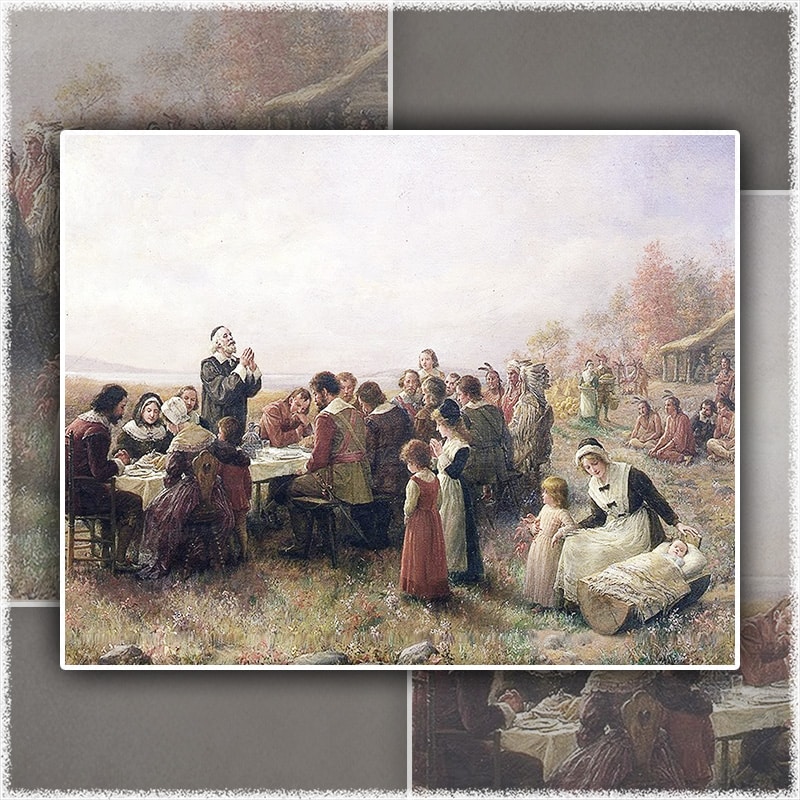
The holidays of America and most of Western civilization are the result of Christian influence and origin. As some of the most important holidays in America and throughout the world are celebrated at the end of the year, it is appropriate to rehearse the significance of their Christian beginnings. While secularists, atheists, agnostics, "free thinkers," and other forms of irreligion attempt to rob Christians of the heritage they have given to the world, followers of Christ must be more deeply resolved not to allow this group of antagonists to bully Christians and the world into submission.As the calendar year draws to an end, many opportunities for meaningful Christian celebration should not be overlooked. In America, Christians should make every effort to capitalize on the Christian heritage bequeathed to the nation by our forefathers—especially Christian Heritage Week, Bible Sunday, Thanksgiving, and Christmas, not to mention lesser-known observances. Important historical and spiritual events should not be permitted to lapse without being duly noted an observed by Christians—whether in the home, business, or local congregation. Contents In addition to the highlights of this month that are discussed below, additional subjects of interest regarding our Christian heritage are presented online, where they are arranged according to dates of occurrence—with particular attention being given to the influence Christianity has exercised upon the origin of America. The online calendar where these articles are arranged is under continual development with new articles appearing as they become available. By clicking the message box below, readers will navigate to the present month under consideration. The last four months of our year, September, October, November and December, all receive their names from Latin numerical terms. Prior to the introduction of January and February into our calendar system, the old Roman calendar employed a calendar of only ten months. Latin numbers were given to these months: septem, (meaning seven) became September; octem, (meaning eight) became October; novem (meaning nine) became November; decem (meaning ten) became December. When January and February were added to the ten-month calendar to become our twelve-month calendar, these latter four months retained their Latin names.In the Julian and Gregorian Calendars, November is the eleventh month of the year. November in the Northern Hemisphere is one of the months of autumn, but in the Southern Hemisphere it is the seasonal equivalent of May in the Northern Hemisphere and vice versa.The official birth flowers of November are the chrysanthemum and peony. The chrysanthemum were first cultivated in China during the 15th century BC as a flowering herb and reached the Western world during the 17th century. Today, it is estimated that more than 20,000 varieties of chrysanthemums exist and because of their popularity are known as the “Queen of Fall Flowers”. They are believed to symbolize friendship and convey well-wishes.Observance: Prior to Election DayWhile the overwhelming majority of Americans are not pastors or church leaders, all Christians should be aware of the active role pastors played in early America to bring about the birth of the nation. America was founded on Christian biblical principles, but for many years, denominational leaders have failed to encourage the clergy and local churches to speak out on political issues. Fear of reprisal from the IRS has enslaved many denominational leaders to the notion that Christians should not speak out concerning the political direction of the nation. But early American ecclesiastical leaders were not timid about proclaiming the fact that Scripture teaches that the reign of Christ should be extended to the entire world, including politics.Pastors are encouraged to invited local politicians to an Election-Day Service to remind them of their duties under God and their responsibility to the Christian legal foundation of America. King George III reigned over the British Empire at the time of the American Revolution. He realized what Americans have forgotten. King George called the Revolution in America a "Black-robe Rebellion" because many pastors wore black clerical attire into their pulpits and preached that if the King and the English Parliament would not abide by the Law of God, the citizens had a right to throw off the yoke of tyranny. Pastors laid the theological foundation for the greatest nation in the history of the world, and if America is to remain great, pastors and church leaders will have to take a stand as courageous as our spiritual forefathers.The first Tuesday in November is "Election Day." Below are some valuable resources for Christians and church leaders with regard to this important opportunity to help Christianize our nation:American Family Association: Christian Coalition: Eagle Forum: Million Voices: WallBuilders: and Remembrance: Congressional Spiritual Proclamations in MarchAmong the thousands of documents and events that demonstrate America's Christian origin are the sixteen spiritual proclamations issues by Congress during the American Revolution. Following the pattern of fasting, praying, and offering of thanksgiving to God that was use in the New England Colonies, Congress asked the American states to fast and pray in the spring and offer prayer and thanksgiving in the fall of the year. States were asked to invite their citizens to cease their labors and observe the day as proscribed by Congress.The first of the sixteen spiritual proclamations was issued in late spring on June 7, 1775 and was a fasting and prayer proclamation. The sixteenth and last spiritual proclamation to be issued by Congress on August 3, 1784 was a thanksgiving proclamation.Congress issued two proclamations in the month of November during these years. The spiritual proclamation numbers, the dates they were issued, and the purpose for which they were issued are listed below:Proclamation #4 – November 1, 1777: ThanksgivingProclamation #6 – November 16, 1778: ThanksgivingObservance: On or prior to November 11In the United States, Veterans' Day is usually observed on November 11. If this date occurs on a Sunday, usually the following Monday is employed as the day of observance. If the eleventh should fall on a Saturday, it may be observed that day or the beginning of the following week.One of America's most decorated veterans was Sgt. Alvin York of Pall Mall, Tennessee. He was a deeply committed Christian who sought to live a sanctified Christian life as a member of the Churches of Christ in Christian Union (Circleville, Ohio). He was America's most highly decorated veteran of World War I.Observance: Sunday before to Saturday after ThanksgivingNational Bible Week begins the Sunday before Thanksgiving. That Sunday is designated as Bible Sunday. Because Bible Sunday immediately precedes Thanksgiving, it generally receives little if any attention. Therefore, it is suggested that pastors and local churches observe Bible Sunday one Sunday earlier to call attention to Bible week and yet make allowance for attention to be given to Thanksgiving the Sunday before Thanksgiving. Observing Bible Sunday one week earlier will also allow pastors sufficient opportunity to celebrate Thanksgiving the Sunday before this important holiday.One of the most influential organizations used of the Lord to distribute Bibles around the world has been The Gideons International. Gideons are laymen and women who give sacrificially of themselves and their personal resources to advance the kingdom of Christ. It is safe to make the generalization that no other Bible-distributing organization contributes as much to the local churches throughout America and many parts of the world as does The Gideons International. Usually, local camps or organized groups of Gideons have speakers available to speak at local churches. In many cases, arrangements may be made with local Gideons for one of their speakers to address a congregation, speaking for a small portion or the entire speaking-portion of the service. A love offering will be deeply appreciated and used wisely to continue to place Bibles in hotels, hospitals, and other places where souls are in need of Jesus Christ. Please help the Gideons today!Observance: First or second Sunday of NovemberThe International Day of Prayer for the Persecuted Church is held in early November. In Western Christianity, the lives of Christians who have departed this world have been remembered in early November through "All Saints Day" and "All Souls Day." It is fitting that the modern Church set aside early November as a time to remember and pray for fellow believers who are being persecuted around the world. Many Christians support this effort through the International Day of Prayer for the Persecuted Church (IDOP). Riding upon the shoulders of Darwinism, irreligious and secular governments around the world seek increasingly to flex their tyrannical muscles. Secular irreligious governments, unfettered by divine law, always establish man's hateful, intolerant laws. The twentieth century alone clearly demonstrates how irreligious Darwinian governments have slaughtered millions around the world. Because America's Founding Fathers believed human rights originate with God, it is not possible to be a Darwinist or Marxist and be a true American. Observance: Fourth Thursday of NovemberIn America, the Thanksgiving tradition is commonly traced to 1621, the year after the Pilgrim Fathers arrived in the New World. After arriving in present-day Massachusetts, the Pilgrims experienced an extremely difficult first winter in their new home. With the assistance of the Wampanoag Natives Indians, the Pilgrims enjoyed a bountiful harvest in 1621, and to celebrate God's goodness, the Pilgrims joined with Natives to celebrate. Though an annual Thanksgiving feast was not observed until the 1660s, subsequent Thanksgivings to 1621 were observed. In addition to feasts, the Pilgrims and Puritans, who followed to the New World, also observed seasons of fasting. This latter practice was used by civil leaders in the American Colonies for many years. President George Washington issued the First Presidential Thanksgiving Proclamation on October 3, 1789, establishing November 26, 1789 as a day of thanksgiving and prayer to "Almighty God" for His providential care of our fledgling nation.Observance: On or before November 30The Apostle Andrew, the brother of St. Peter, carried the Gospel to many Asiatic nations, beginning his missionary endeavors in the Provinces of Vithynia and Pontus on the southern shores of the Black Sea. It is believed that he subsequently traveled to the City of Byzantium where he established a church.In one of his missionary tours to Achaia (Greece), Andrew visited the city of Patras where his preaching and miracles drew many to Christ, including Maximilla, the wife of the Roman Proconsul, Aegeates. The Proconsul's own brother, Stratoklis, followed the example of his sister-in-law, Maximilla, and became a Christian as well. Andrew, realizing the sincerity of his faith consecrated Stratoklis to the office of Bishop of Patras. What followed this experience resulted in Andrew's martyrdom.Our suggested resources for the month of October address several subjects of importance. In addition to suggested timely reading materials, our occasional Heritage Hallmarks remind our readers of significant moments in the life of the Christian Church and American life. They are designed to reflect upon the remarkable heritage bequeathed to America and the world by the Christian Faith and seek to visualize important moments in history. Secular influence has removed important monuments of Christian influence, but our Heritage Hallmarks allow parents and grandparents the opportunity to remind succeeding generations of the glorious heritage of Christianity. For a list of additional materials available at our site, please click the following link: Our Resources.To speak intelligently to a believing and unbelieving world, Christians must not only be able to defend the truth associated with the lives of the virtuous, but must also be prepared to expose the facts concerning the villainous. For this reason, individuals and events that are both beneficial and malignant are noted below. Knowledge of the virtuous provides insight into how the believer should live, while examples of the villainous prepare believers to "give an answer" to every individual of how life should not be lived (1 Peter 3:15).November 1772: Samuel Adams initiated the formation of the Committees of Correspondence that was so vital to the development of American interests prior to and during the Revolutionary War. See our article: November 11, 1620: After more than two months at sea, the Pilgrims arrived at Cape Cod. November 14, 1915: Booker Taliaferro Washington (April 5, 1856 - November 14, 1915) was an African-American educator, author, orator, and advisor to presidents of the United States. Between 1890 and 1915, Washington was the dominant leader in the African-American community. For more information concerning his influence upon American education, see David Barton, Four Centuries of American Education, 41.November 15, 1794: John Knox Witherspoon (February 5, 1723 - November 15, 1794) was a Scots Presbyterian minister and a signatory of the United States Declaration of Independence as a representative of New Jersey. As president of the College of New Jersey (1768-94; now Princeton University), he trained many leaders of the early nation and was the only active clergyman and the only college president to sign the Declaration.November 22, 1963: Clive Staples Lewis (29 November 1898 - 22 November 1963), commonly called C. S. Lewis and known to his friends and family as "Jack", was a novelist, poet, academic, medievalist, literary critic, essayist, lay theologian, and Christian apologist. Born in Belfast, Ireland, he held academic positions at both Oxford University (Magdalen College), 1925-1954, and Cambridge University (Magdalene College), 1954-1963. November 25, 1748: Isaac Watts (17 July 1674 - 25 November 1748) was an English hymnwriter, theologian and logician. A prolific and popular hymnwriter, he was recognized as the "Father of English Hymnody", credited with some 750 hymns. Many of his hymns remain in use today, and have been translated into many languages.November 30, 1864: The Battle of Franklin, TN was waged between Union and Confederate forces on this date. Confederate chaplain Edward McKendree Bounds was engaged in the conflict and taken captive. E. M. Bounds is widely known for his writings on prayer. Though Dr. Schmidt's interest focuses upon the commercialization of American holidays, his book still reflects the Christian influence of American holidays: Leigh Eric Schmidt, Consumer Rites: The Buying and Selling of American Holidays (Princeton: Princeton University Press, 1995). Usually this is observed the first or second Sundays of November and dates of observance vary among organizations supporting this effort. See and . Bradford, Plymouth Settlement, 64. See John Woodbridge, More Than Conquerors: Portraits of Believers from All Walks of Life.Christian Living in NovemberChristian Living in NovemberChristian Living in NovemberChristian Living in NovemberChristian Living in NovemberChristian Living in NovemberChristian Living in NovemberChristian Living in NovemberChristian Living in NovemberChristian Living in NovemberChristian Living in NovemberChristian Living in NovemberChristian Living in NovemberChristian Living in NovemberChristian Living in NovemberChristian Living in NovemberChristian Living in NovemberChristian Living in NovemberChristian Living in NovemberChristian Living in NovemberChristian Living in NovemberChristian Living in NovemberChristian Living in NovemberChristian Living in NovemberChristian Living in NovemberChristian Living in NovemberChristian Living in NovemberChristian Living in NovemberChristian Living in NovemberChristian Living in NovemberChristian Living in NovemberChristian Living in NovemberChristian Living in NovemberChristian Living in NovemberChristian Living in NovemberChristian Living in NovemberChristian Living in NovemberChristian Living in NovemberChristian Heritage Fellowship FacebookChristian Heritage Fellowship FacebookChristian Heritage Fellowship Facebook
The holidays of America and most of Western civilization are the result of Christian influence and origin. As some of the most important holidays in America and throughout the world are celebrated at
Dr. Stephen Flick | October 27, 2025 | Christian Calendar (Holidays)
Now Suggested Resources
This page attempts to gather simple resources from our site into one place that users may quickly survey. Content of this page changes regularly, offering suggestions on a breadth of subjects from spiritual formation to the advocacy of the Christian faith. Themes or subjects highlighted each month are addressed by our resources. However, no attempt is made on our part to provide resources over a broad field of subjects. Rather, our interest is to provide simple resources on a limited number of subjects to individuals, businesses, churches, and other organizations that will enable them to articulate the glorious heritage Christianity has bequeathed to America and the world.
When seeking to affect our world for Christ, our users are encouraged to remember: "Where little effort is raised, little effect will be realized!" Your effort can make a difference!

Welcome to NOW
Dr. Stephen Flick
Audio PlayerThemes for the month of December:
Featured Christian Living Articles
Listed below are several of our monthly Christian Living Articles which highlight our heritage. Each article briefly features pertinent events and observances associated with each respective month. Informative summaries and links to related articles may be found in each. While only a few timely posts are listed below, all of our Christian Living Articles may be found here: Christian Living Articles
Christian Living in January
Christian Living Articles | January Articles
Whereas the end of each year is usually focused upon Thanksgiving, Christmas, and end-of-year activities, January offers a much-appreciated respite from the demands that often accompany these important celebratory events. While most of us are still accountable to the demands of every-day life as the New Year begins, this season of the year may be employed to establish the tone of the entire year. Casting an eye upon the year that is behind us should deepen the resolve of the true follower of Christ to follow more closely to the Master. If otherRead more...
Christian Living in December
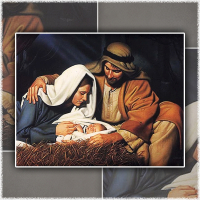
Christian Calendar (Holidays) | Christian Living Articles | December | December Now
Often, the Christmas season is the most meaningful time of year—for both the believer and unbeliever. Many fail to use this season of the year to point to Christ as fully as they might to Christianize the world around them. While some attempt to sanctify the carnal and merely sensuous for Christian purposes, the Apostle Paul warns believers to build with materials that are most precious and most enduring (1 Corinthians 3:10-18). For this reason, Christian leaders should look eagerly upon the Christmas season with the intent to redeem every oppoRead more...
Christian Living in February
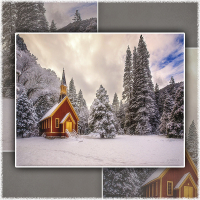
Christian Calendar (Holidays) | Christian Living Articles | February | February Articles | February Now
Emboldened secularism and irreligion threatens not only the Christian foundation of America, but more importantly threatens the spiritual life of believers and their churches. By denying the historical facts concerning the positive influence of Christianity, atheism, agnosticism, and various forms of irreligion seek to rob Christianity of its global influence. As a result, these forms of irreligion and other world religions claim for themselves the advances in society around the world made primarily by Christianity. "Christian Living in FeRead more...
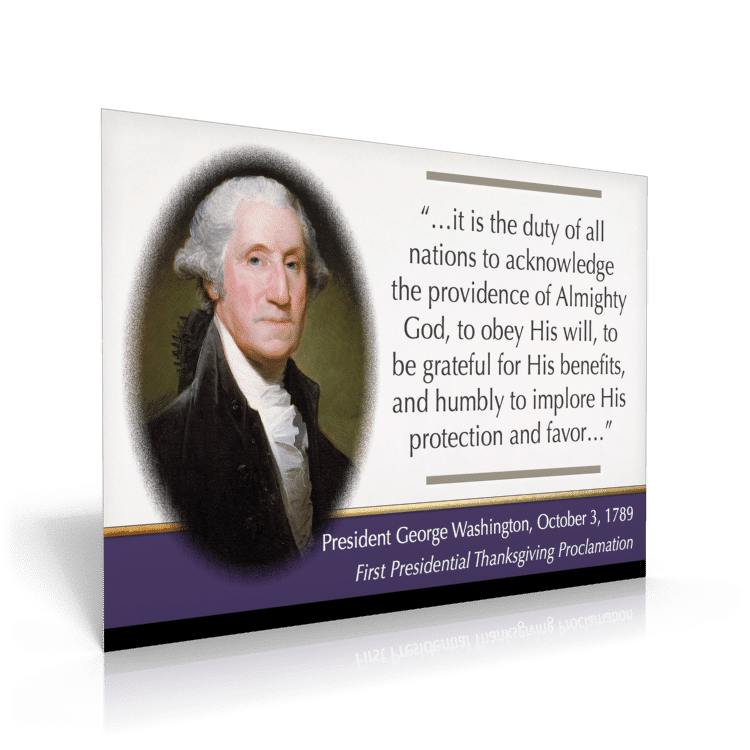
Heritage Media Quotes
To assist churches, individuals, and other parties seeking to share brief quotations that demonstrate the religious and Christian commitments of America's Founding Father and other eras of national history, we have developed our "Media Quotes." Each quotation is accompanied by an image of the individual being quoted and is bundled together with a sufficient number of additional quotes for each week of December – one per week. Media quotes are sold on a monthly subscription basis, though a set for any given month may be purchased separately.
Quote Cloud
Quotes Subscription
Our Newsletter
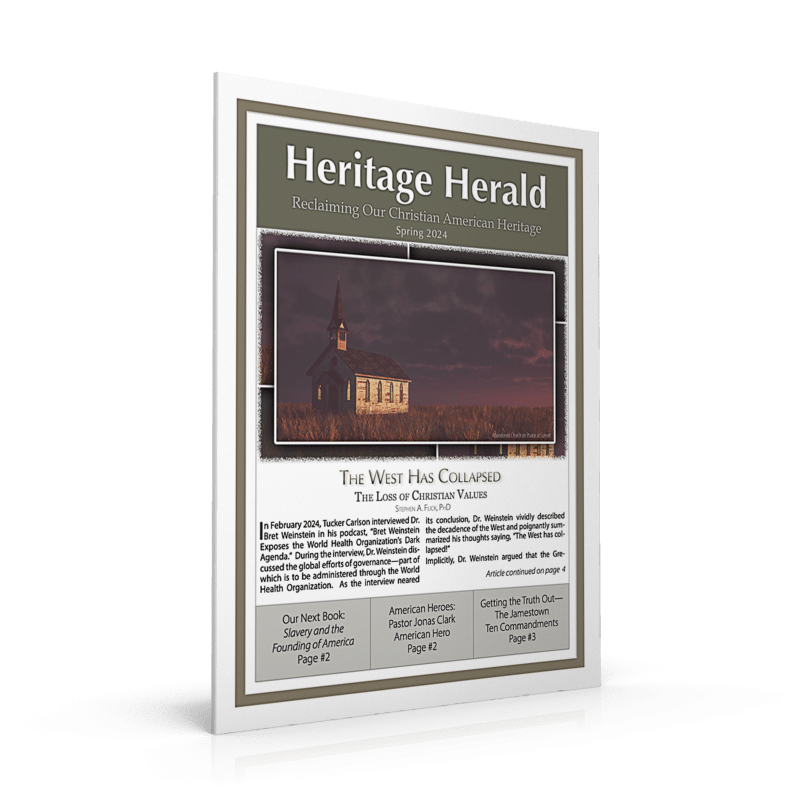
Businesses, churches, organizations, and individuals that wish to advocate America's true Christian heritage are given a helping hand through the us our newsletters. You too may wish to communicate to your community by making them available to family, friends, customers, or other acquaintances. To pre-order the desired number of copies for our next newsletter, please select the button below.
Newsletter Subscription
Additional Resources
While it is beyond the scope of our site to provide extended bibliographies or reading lists of the relevant subjects that arise throughout the course of any given month, our "Suggested Resources" section contains recommendations for materials which may be addressed during December. Often these materials may be obtained online.
Christian Pride Bumper Magnet
Our Bumper Pride magnetic stickers are designed to enable believers to tastefully display their Christian faith, especially during the Easter and Christmas seasons. Artistically designed, our magnets relate simple Christian truth, giving voice to the sentiments and teachings of God's Word. But, Bumper Pride magnets will assist you in displaying your children's and grandchildren's latest artistic achievement on your refrigerator door, or simply display them on metal office furniture, garage doors, or other creative means of magnetic display. Show your family, neighbors, friends, and the driver behind you that your not ashamed to stand for Christ. Order yours today!
Quote Cloud
Magnet Order
Notable Events
In the month of December, a number of significant events have occurred. We trust that a knowledge of these will assist our readers in more clearly communicating the true influence of Christianity upon America and the world.

Get Feed for iCal (Google Calendar). This is for subscribing to the events in the Calendar. Add this URL to either iCal (Mac) or Google Calendar, or any other calendar that supports iCal Feed.
Support America's
Christian Heritage
Funding for Christian Heritage Fellowship (a tax-deductible organization) is provided by generous supporters who believe in the glorious heritage Christianity has bequeathed to America and the world. Contrary to irreligious claims that America's Founding Fathers were secularists, Christian Heritage Fellowship Inc. demonstrates in our articles and printed materials that they were overwhelmingly Christian in both their public and private lives. Your generous support will help ensure that the truth concerning the positive influence of Christianity upon America and the world will continue to be proclaimed.