Third Monday of February
President's Day

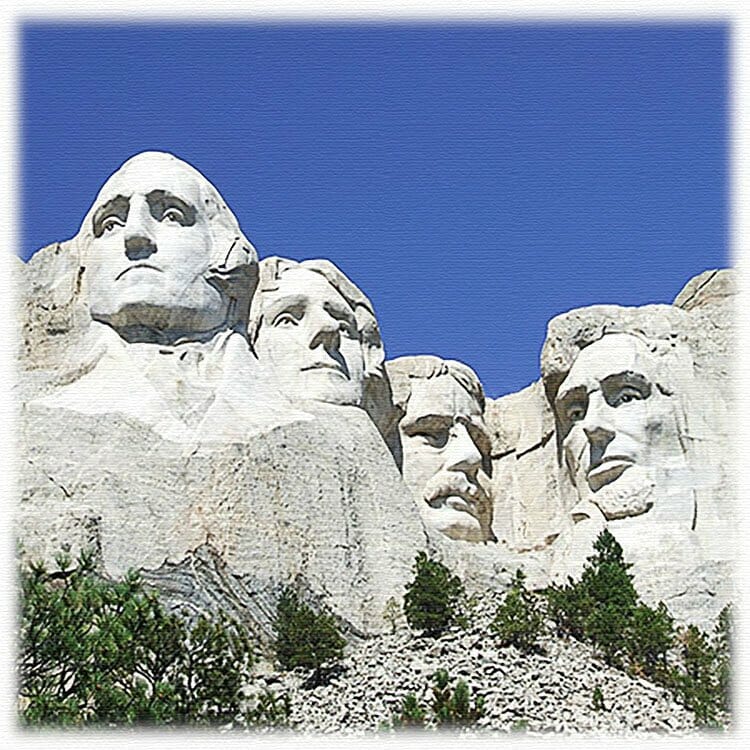
The Father of America, George Washington, was born on February 22. But in honor of our first President, the third Monday of February has been designated as the day to remember his stature in America's life. In 1880, a federal holiday honoring George Washington was implemented by and Act of Congress for government offices in the District of Columbia and expanded in 1885 to include all federal offices. Originally, Washington's actual birthday, February 22, was celebrated on the day of his birth, but in January 1971, the Uniform Monday Holiday Act shifted its observance to the third Monday of February, usually not being celebrated on his actual birthday. For this reason, "President's Day" is generally the expression used to designate the day.


Celebrating Our Christian Heritage!
We are a user supported non-profit organization.  Your small gift is tax-deductible and will go a long way to help us meet our operating budget — and it is vital, because
America deserves to know its true heritage.
Please contribute today!
Click to donate

Related Reading

Washington's January 1, 1795 Thanksgiving Proclamation

Washington's January 1, 1795 Thanksgiving Proclamation

American History | Presidential Proclamations | Thanksgiving

Because nearly all American colonies under British control had established state churches,[1] America's Founding Fathers were not willing to raise issues that would unnecessarily divide them in their efforts to establish a stable government. For this reason, a promise was made not to establish a federal or national church when writing the Constitution and amended Bill of Rights. However, as the following proclamation demonstrates, America's Founders were not ashamed of their Christian Faith. The history behind the proclamation and its obserRead more...

The Truth about Separation of Church and State

The Truth about Separation of Church and State

American History | Christian Calendar (Holidays) | Christian History | December Articles | Role of Pastors

Since 1947, liberal judges have reinterpreted the historical context of the First Amendment that ensured that congress (or the federal government) would not establish a state church or elevate any single denomination over any of the other Christian denominations. America's Founding Fathers regarded the First Amendment as a guarantee that the federal government would not attempt to make any one Christian denomination the dominant and preferred denomination of the nation. Since the late 1940s (and particularly the early-1960s), liberal judges havRead more...

Thomas Jefferson's Wall of Separation Letter

Thomas Jefferson's Wall of Separation Letter

American History | January Articles | Role of Pastors | Thomas Jefferson

On January 1, 1802, Thomas Jefferson penned a letter that has been employed by secularists against America's historic legal foundation. Repeatedly members of the Supreme Court have relied upon secular interpretations of both the writings and personal example of Thomas Jefferson. Employing Jefferson against the previous historic rulings of the Supreme Courts and the Christian foundation of American law, the Supreme Court, since 1947, has relied upon skewed and misinterpreted excerpts taken from the writings of Thomas Jefferson. A significant conRead more...

Samuel Huntington

Samuel Huntington

January Articles | Signers of Declaration of Independence

Samuel Huntington (July 16, 1731 – January 5, 1796) was a jurist, statesman, and Patriot in the American Revolution from Connecticut. As a delegate to the Continental Congress, he signed the Declaration of Independence and the Articles of Confederation.Samuel Huntington Christian Heritage Fellowship, Inc. is dedicated to reclaiming America’s Christian Heritage and celebrating the life-changing influence of the Gospel around the world. Our ministry seeks to speak to several specific areas of need. First, we seek to advocate a biblical worldviRead more...

Thomas Nelson, Jr.

Thomas Nelson, Jr.

January Articles | Signers of Declaration of Independence

Thomas Nelson, Jr. (December 26, 1738 – January 4, 1789) was an American planter, soldier, and statesman from Yorktown, Virginia. He represented Virginia in the Continental Congress and was its Governor in 1781. He is regarded as one of the U.S. Founding Fathers since he signed the Declaration of Independence as a member of the Virginia delegation.Read more...